Category Archives: Uncategorized

Arts History timeline for St. Petersburg, Florida

Timeline of the arts in St. Petersburg

1910 – Census figures show St. Petersburg population is 4,127

1913 – Opera House opens – purportedly most modern one south of Washington DC

1915 – J. Liberty Tadd opens the Florida Winter Art School

1917 – Art Club of St. Petersburg is formed

1917 – J. Liberty Tadd dies in Philadelphia on 9th June.

1920 – St Petersburg Museum of History is founded

1920 – Census figures show St. Petersburg population is 14,237

1922 – Carreno Music Club is founded in St. Petersburg

1925 – Mark Dixon Dodd moves to St. Petersburg

1925 – Jordan Dance Hall, now known as the Manhattan Casino, opens in St. Petersburg attracting African-American talent from around the country.

1930 – Mark Dixon Dodd opens the Mark Dixon Dodd School of Art in 1930 at 232 Beach Drive

1931 – Mark Dixon Dodd has first solo exhibition at the Art Club of St. Petersburg

1936 – Mark Dixon Dodd is hired to design homes in the Driftwood subdivision in St. Petersburg

1939 – The Earl Gresh Wood Parade museum opens at 22nd Ave N and 4th St in St. Petersburg.

1940 – Census figures show St. Petersburg population is 60,812

1941 – The Jordan Park Exhibition Center Art Gallery opens.

1946 – The Edart Museum of Shells & Minerals is opened at 3513 2nd Ave. S

1950 – Members of the Carreno Music Club form the St. Petersburg Symphony

1950 – St. Petersburg Art Galleries, an auction house, opens on St. Petersburg Beach.

1953 – Craft Village opens at 2700 Fourth Street North in St. Petersburg

1959 – The Science Center is founded (November)

1960 – Census figures show St. Petersburg population is 181,298

1961 – St Petersburg Historical Society establishes the Haas Museum at 3511 2nd Ave S.

1965 – Museum of Fine Arts opens in St. Petersburg

1965 – The Bayfront Center, with capacity for nearly 7,000 opens in St. Petersburg.

1966 – St. Petersburg Symphony merges with the Tampa Philharmonic

1966 – Racist mural by George Snow Hill is torn down at City Hall and has never been replaced.

1972 – First street mural appears in St. Petersburg at the Arts Center, 100 Seventh Street South.

1975 – St. Petersburg International Folk Fair Society is founded.

1976 – Mainsail Art Festival is founded

1977 – American Stage is founded as The Palisades Theatre at what is now Eckerd College.

1979 – The Palisades Theatre opens in a building in downtown St. Petersburg

1980 – St. Petersburg attorney Jim Martin responds to article in Wall Street Journal, “Art World Dilly Dallies Over Dali’s”

1982 – Salvador Dali Museum opens in a former marine warehouse in the Bayboro Harbor district in St. Petersburg.

1986 – American Stage in the Park is launched under the name Shakespeare in the Park.

1986 – Great Explorations, The Hands-on Museum is founded and opens adjacent to the Salvador Dali Museum in St. Petersburg.

1986 – Florida CraftArt (then Florida Craftsmen) opens its first physical space in the state in downtown St. Petersburg.

1986 – Attempt is made to turn the Studebaker Building into artist studios by John Warren.

1987 – ArtSpace is opened in McNulty Station. 

1987 – The Mahaffey Theatre is born out of the Bayfront Center and undergoes extensive renovations.

1989 – The Salvador Dali Museum embarks on a new marketing direction to attract international visitors which stood at 3% in 1989 and culminated at 45% by the mid-1990s.

1989 – Gallery Hop, the precursor to Art Express and Second Saturday Artwalk is started.

1989 – Artworks! Festival is started as an umbrella festival organized by the Chamber of Commerce.

1990 – Census figures show St. Petersburg population is 238,629

1990 – Haas Museum closed by St. Petersburg Historical Society.

1990 – Dali Museum & Great Explorations cooperate under Museums of Bayboro heading

1991 – Chamber of Commerce promotes Artworks! Festival

1992 – Florida Craftsmen Gallery relocates in 1992 to McNulty Station in downtown St. Petersburg

1992 – An attempt to convert Perma House, 1600 4th St S., into artists studios by John Warren

1993 – The first Museum Month is promoted with four museums participating in St. Petersburg

1993 – Mayor Dave Fischer launches Operation Commitment in Uptown Neighborhoods which resulted in future downtown housing growth.

1994 – Get Down Town music series starts, the precursor to First Fridays.

1995 – Florida CraftArt moves to 501 Central Avenue.

1996 – The Looper Trolley is started as a partnership between the City, four museums and two hotels.

1996 – St. Petersburg Clay Company is founded by Russ Gustafson Hilton, Stan Cowan and Charlie Parker.

1996 – Treasures of the Czars in downtown St. Petersburg at the Florida International Museum completes a six month run with over 600,000 visitors

1996 – The Looper Group Inc is formed to operate a trolley service linking all five museums with the two major hotels and the Pier.

1998 – Titanic: The Exhibition in downtown St. Petersburg at the Florida International Museum completes a six month run with over 830,000 visitors and still holds the record of the most visitors to a museum exhibition in Florida.

1998 – The Florida Holocaust Museum relocates to downtown St. Petersburg from Madeira Beach.

1998 – The Palladium Theatre opens in a historic building on the northern edge of downtown St. Petersburg.

2000 – St Pete Clay Company and Highwater Clays move to the Train Station in what is now called the Warehouse Arts District in St. Petersburg.

2008 – freeFall Theatre founded in St. Petersburg

2009 – Morean Center for Clay moves to the Historic Train Station in the Warehouse Arts District.

2009 – Duncan McClellan purchases an old tomato processing plant in the Warehouse Arts District and converts it to a residential, art gallery and glass blowing facility.

2010 – Population of St. Petersburg decreases to 244,729

2010 – The Chihuly Collection opens in downtown St. Petersburg along Beach Drive.

2010 – One block of downtown, the 600 block of Central, begins offering attractive leases to artists and galleries.

2011 – Salvador Dali Museum expands and moves to a new building.

2012 – Leave A Message exhibition on street art opens at the Morean Arts Center

2012 – Arts Conservatory For Teens is founded in St. Petersburg.

2014 – Mayor Rick Kriseman launches an aggressive approach to supporting the arts after years of stagnation in the City. 

2015 – The Shine Mural Festival is launched through the efforts of the City of St. Petersburg and becomes an annual event.

2016 – The City creates and funds individual artist grants for the first time in its history.

2018 – Imagine Museum opens in St. Petersburg with collection covering the American studio glass movement.

2018 – Tom & Mary James Museum of Western Art opens in St. Petersburg.

2018 – The City funds arts grants at a historic record high.

2019 – The new Police Headquarters opens in St. Petersburg with over $500,000 in public art incorporated in the building.

2019 – Population of St. Petersburg increases significantly to an estimated 265,098

2020 – The Museum of the American Arts & Crafts Movement opens in St. Petersburg with an estimated cost of $100 million.

2020 – The New Pier opens featuring nearly $4 million in public art.

To be added later:

Public art goes on parking garage of Florida Federal Building.

What year did American stage move from 3rd Street South to its new location on 2nd Ave N?

What year was arts funding and office cut under Mayor Baker?
Museum Operations in the age of Covid19

WDA FACEBOOK PROFILE PIC

Wayne Atherholt is a thirty-year museum veteran and former art museum director who is director of cultural affairs for the City of St. Petersburg.  Photo: Courtesy Helen Tilston

Forethought

Each state in the United States will have a different plan.  In Florida, museums may open at 25% capacity starting Monday, 4th May 2020, as long as it isn’t interactive exhibits such as children’s science centers.  But prior to opening, there is an awful lot to consider when operating in a safe environment and there is no rule book on how to do this and very little information online.  We provide this information as a courtesy for our St Petersburg museums and for the entire museum community understanding that each museum is different and will be able to re-open on their own schedule depending on availability of sanitizer, masks, new operations manuals and a capable staff.


Start Your Museum or Attraction Plan for Re-opening

While museums have been closed for over a month in most cases, the time is coming to start thinking about what does your museum look like in operation during the threat of Covid19. And just because you will be allowed to re-open, doesn’t mean you will return to operational activities from two months ago. There is a lot to consider.

While this isn’t an exhaustive list, and recommendations will likely change and change again, this will help you and your staff to start planning for the day that eventually will arrive when you will be able to open your doors again. And while re-opening at some point is going to happen, it certainly can’t happen any time soon without serious planning, purchasing, retraining and communicating to the general public.

Guest Experience Questions

Let’s first take a look at the guest experience. Assuming you’ve communicated that you’re open and what the expectations and new reality is, have a look at what your guest will experience right the way through the museum experience.When they arrive will they need to touch doors? And if they do, will there be contactless hand sanitizer nearby? Who fills it? Can you even get it from a supplier?

On to the admissions desk or box office. Is there a protective shield for staff working with the public? Is the floor marked for physical distancing for the general public while they wait in a queue? Will staff be wearing gloves? Will they be trained in the new reality of handling money and by whom? What will the procedures be for cleaning this area and how often? And who does it?

This is just the start of a visit. If you go through an entire visitor experience, you’ll discover there are areas where you will need to make major changes. Perhaps your museum lends itself to a linear experience where flow is controlled and there is a clear route to take.

You’ve probably seen the one way markings in supermarkets!  As you can see there are a lot of questions and the answers are in many cases not that easy.

Learning from our Asian colleagues

As American and European museums look to what their new normal will look like, we can learn an awful lot from Asian attractions and museums. Many, especially indoor attractions (i.e. museums), reopened and had to close again. This is particularly true in China, Hong Kong and Japan.

Here are some of the new procedures that have been and are being used by Asian counterparts that likely will create a framework for other museums and attractions:

  1. Limiting visitor numbers – Some theme parks have cut their visitor caps by 50% which will allow visitors to feel much more safe. With indoor attractions it is even more critical to limit the number of visitors. There are ticketing systems that can handle this online and in advance as well.  In Florida, museums have been allowed to open at 25% of capacity.
  2. Taking temperatures – This has become fairly standard at Asian attractions and likely would be part of any re-opening for American, British and European museums.
  3. Cashless payments only – While much of America still hasn’t gone to contactless payments, there is still that option with the contactless credit cards and Apple/Google pay. Otherwise, the old school pin pad can be used but that in itself creates a disinfecting issue after it is used.
  4. Health certificates/QR codes – In some countries citizens are given certificates or QR codes and only those that meet certain requirements are allowed in. I don’t see that happening in America which makes some of these other options all the more critical.  Consider testing for all staff and letting the public know this is your standard operating procedure.
  5. Masks – These are worn by guests and in some cases required. Same would go for staff. Would you feel safe going to an indoor space that doesn’t require masks? And do you have a supplier for these yet?
  6. Extra cleaning – It goes without saying that museums and attractions will need to revisit their cleaning schedules and most likely invest in additional labor to keep their attractions clean. It will also require materials and cleansers.
  7. Hand sanitizer – This would need to be at any point of contacts such as doors, toilets, box office, etc.  It should be contactless as well.
  8. Guides – Tour guides will be a thing of the past for now. Consider disposable guides that can be recycled (but not used over and over without sanitizing and then who is going to trust that).
  9. Controlling traffic patterns – Supermarkets learned this early on. They are now a series of one way aisles. Many audio guided blockbuster exhibitions ran this way for years. Think about your museum as a linear story – tell it – and make your guests feel safer.
  10. Those who operate retail and food/beverage facilities will need to work on additional measures for those industries as well.
  11. Experiential exhibits – For those museums that have some experiential exhibits, especially children’s museums, there is an entire layer of Covid19 issues surrounding the safe operations of a facility like that. This is primarily aimed at guiding art museums or museums with limited touch exhibits to a plan. A hands-on museum will require a considerable shift in how it operates.  In Florida, this type of museum has not been allowed to re-open while others have.

Rethink the Communications Plan

You’ll need to work in tandem with local officials as well as state officials and your local DMO (Destination Management Organisation) on communicating the measures you’re taking to make the traveling public safe while visiting your attraction.

This isn’t intended to provide tips on communication but once your attraction opens it will need to be communicated in a much more personal way than whatever you were doing before.  Likely you will be working with more locals and drive market visitors initially as the public gets used to traveling under new conditions. But like so much, what is communicated is likely to change considerably.

Be prepared. Be cautious. And be what museums are: trustworthy.

Tourism & Attractions Marketing: Maps and Directories

How to Effectively Use Maps & Directories to Increase Tourism Visitation

Maps & Directories

There’s so many publications out there even in this web world!  Yeah, I still hear that as often as I heard it twenty five years ago.  Seems like there are publications everywhere that you should be advertising in.  The publisher always thinks you must be in their publication.  But of course you probably can’t be in all of them.  So I’ll take a look at some publications by type to try to give you a better idea how to wade through the many publications that are out there.  If you’re not in a highly developed tourism market, you might be lucky and only have one or two.  For this post, we’ll look just at maps and directories.  We’ll look at in-room publications and destination guides another time.

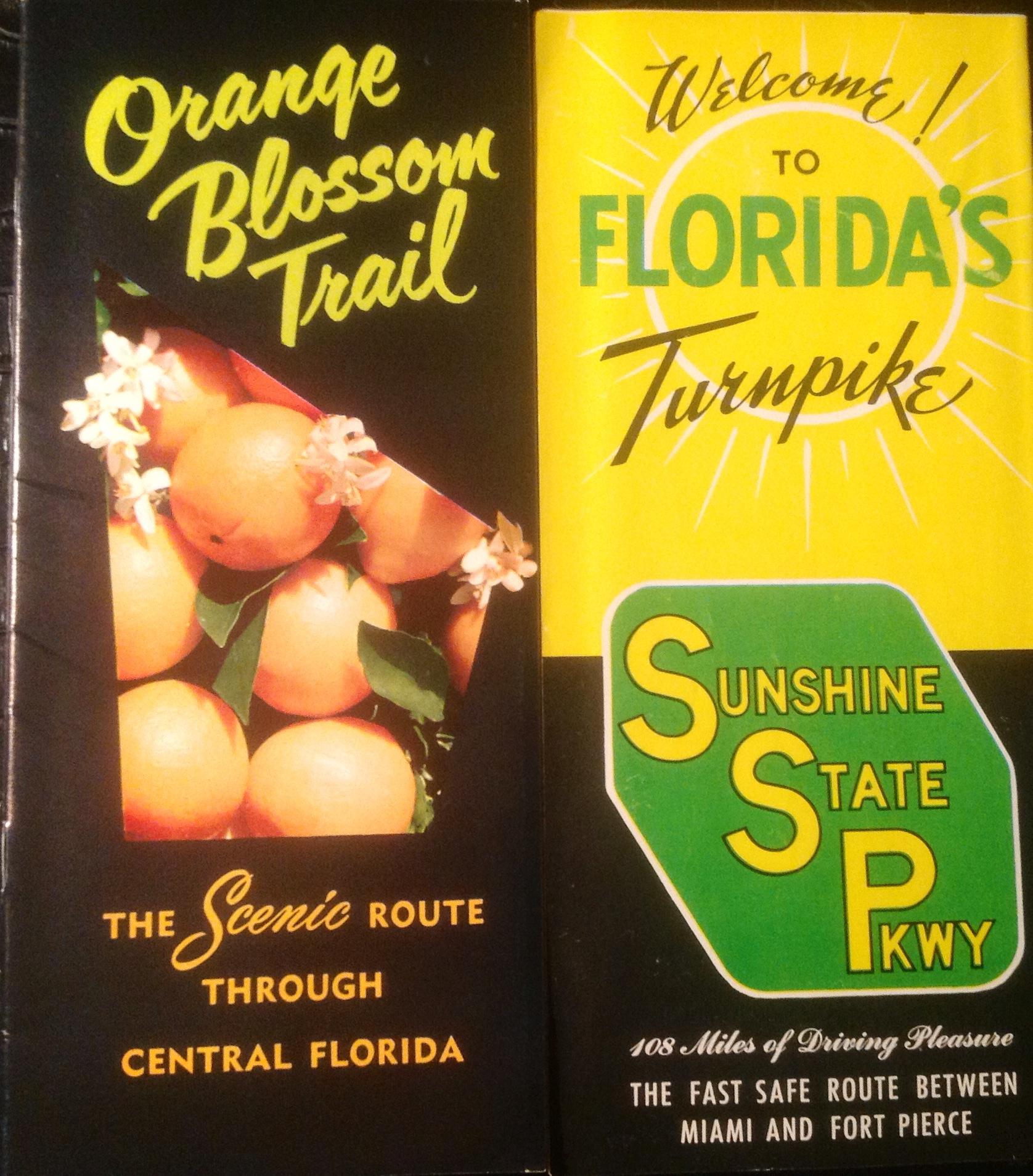
Maps and directories have been published for years in Florida.  These two vintage maps are for particular roads, the Orange Blossom Trail and the Florida Turnpike.

Maps and directories have been published for years in Florida. These two vintage maps are for particular roads, the Orange Blossom Trail and the Florida Turnpike.

Distribution

When an advertising sales person says things like “we’re in every hotel and welcome center” you might want to be cautious.  Every is a strong word.  I base an advertising decision on the facts when buying tourist advertising.  Find out where is the list of hotels or tourist locations the product is in and then spot-check some of those locations.  Ask the front desk what publication they refer visitors to.  Check to see what map the bellmen use to direct guests.  If the hotel still has a concierge, ask them.

In the end, you want a map or guide/directory to an area that is actively used by visitors.  If it is only available at a few locations, then it isn’t worth as much to you.  You want your message to get to people at a nearby airport as they arrive at your destination?  Then go check out what you see and encounter as you actually arrive at the airport.  One airport in Florida actually had its information center on the departures level and was therefore not much use to attractions, however, there were maps and guidebooks distributed at arrivals areas.  Always do your own checking and always do it from the visitor’s perspective.

Charlotte Harbor in Florida has a guide and map that is distributed just about everywhere in that area.

Charlotte Harbor in Florida has a guide and map that is distributed just about everywhere in that area.

Numbers

It really does come down to numbers in the tourism advertising arena.  How many maps are being produced and distributed to your potential customers?  It takes as much money and effort to place an ad in a map (or any tourist publication for that matter) that reaches two people as it does to reach two hundred thousand people.  At some point, you need to draw the line what you won’t do because the numbers are too small.  Only you or your consultant or advertising agency will know that.  If it is a monthly map, how many are produced and distributed and how many are tossed at the end of the month.  Get to know your real numbers.

Effectiveness

This is always a challenge for anyone in marketing, however, this isn’t that challenging in tourism marketing.  Just go to an area of your town or city where there are a lot of tourists looking for things and see what they are using.  What map or guide do they have?  In some destinations you see the tourist after tourist with the same maps or guides physically out looking for something to do.  It is more challenging now with smart phones because everyone has their own map with them but they still pick up and use the old style maps and guides.

When you have your graphics person create the ad, you may want a coupon, but you definitely want the look to be like your brochure.  Don’t change fonts.  Be consistent.  Look to see what your ad would look like on the map.  Does it stand out?  Does it drive someone to want to visit?  Does it help the visitor come to you?

Within The Destination 

The destination is where the visitor to going to spend their vacation.  This might be something as broad as New York or as narrow as Jekyll Island.  Each day, while in destination, the visitor decides what to do and where to go.  They may have seen something online before arriving in destination and decide that is what they want to do.  Or they may have no idea and try to figure it out by looking at maps, asking the front desk or waiter, picking up a visitors guide of sorts or any number of things.

If you do most of your marketing to visitors once they are already in destination then you are in the scavenger business.  Most attractions are that way.  You’re now competing with your colleagues for things to do.  This could include shopping, a beach or mountain day depending on weather, a museum or a free art gallery.  You work together to get the visitor to come to your town, but you compete once they’re there.

So these scavenger attractions probably aren’t reaching a visitor before they are in destination.  But they should be cooperating with each other to get them there.  Once in destination, this is where the attractions try to to lure in the visitor.  And maps and guides are what we are looking at today.  These can be effective in reaching tourists if their distribution is right for your attraction.

The map for the Florida Attractions Association has been produced for many years and was distributed at each member attraction in addition to welcome centers and brochure racks.

The map for the Florida Attractions Association has been produced for many years and was distributed at each member attraction in addition to welcome centers and brochure racks.

Distribution

Years ago, there was a brochure distributor that just serviced campgrounds in the region of Florida I was working in at the time.  This was before anyone ever heard of a luxury RV resort too!  I was responsible for marketing at a museum and it just didn’t fit our demographic though I was, and am, a huge believer in brochure distribution.  So you might have to do some research on who your best customers are and go after similar ones in destination.  If most of your visitors are staying in four and five star resorts, that tells you that probably you should not bother focusing on interstate exit locations for motels.

So far we’ve covered having a brochure (we’ll cover distributing it soon enough) and now maps and guides.  Just remember to really do your homework on distribution.  There are plenty of guides and maps out there.  Pick the one that has the best distribution and usage with regard to your visitors.

You should now have a better idea on how to start a tourism marketing campaign for your non-profit attraction, museum or destination.  The brochure followed by some key print ads.  We will look at plenty of other things you should be doing but we’re still working on basic foundation stuff for now.